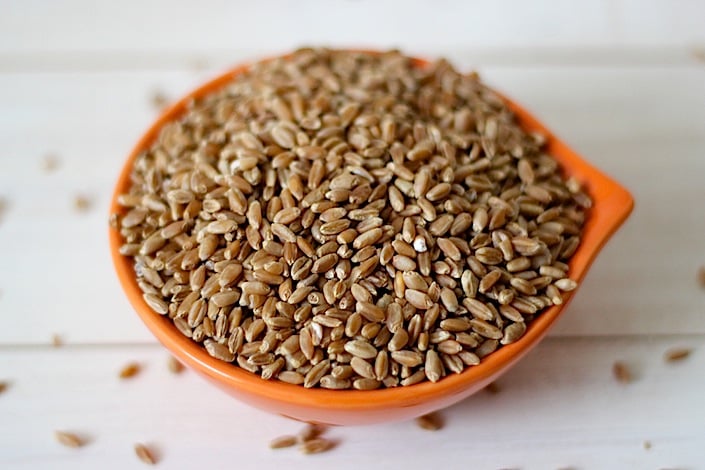
Are Grains and Legumes Bad For You?
For hundreds of years we have been consuming grains and legumes. It wasn’t until recently that we started to really question wether they were good or bad for us. What do you think?
Giving up grains and legumes is quite the fad right now. There is the Paleo diet, Primal diet and many other diets out there that taboo grains and legumes. So what is all the fuss about?
Grains and Legumes have been consumed for many years, but it wasn’t until the past 50+ years that we stopped traditionally preparing grains. Grains and legumes can be very hard to absorb and digest, especially modern day grains.
There is a proper “traditional” way to prepare grains and legumes that allows you to properly digest them. Unfortunately in the fast pace society that we live in, most individuals have eliminated this process all together.
Do I believe grains and legumes are bad for you? No, I do not believe they are bad for you ONLY & IF they are properly prepared. If grains are not traditionally prepared, then I do believe that grains should not be consumed. Bottom line…If you want to eat grains and/or legumes, you must soak, ferment or sprout them before eating them!
Why Should We Soak Grains and Legumes?
So just why is it so important to properly prepare grains and legumes? I recently did a post on Is soaking nuts necessary and how to properly soak raw nuts. Nuts have phytic acid. Phytic acid is also found in grains and legumes. Just as with nuts, soaking grains and legumes is essential for proper digestions.
When eating grains and legumes that haven’t been soaked, the phytic acid binds to minerals in the gastrointestinal tract and can not be absorbed in the intestine and to many bound minerals can lead to mineral deficiencies. By soaking, you are breaking down the phytic acid so it can be absorbed correctly for proper digestion.
Why Should We Grind Flour?
Flour is another important element to talk about when discussing grains and legumes. I have recently started to grind my own flour. Did you know that commercial flours are missing most of their minerals and vitamins? Within 3 days of grinding flour, 80% of the nutrients and minerals have been loss. This can also lead to poor digestion when consuming commercial flours.
I use a WonderMill Grain Mill to grind my flour and I love it! I can totally taste the difference in freshly ground flours and the texture is also quite different! Here is a wonderful post from Spain-in-Iowa explaining The Cost Saving Benefits of Owning A Grain Mill! It is an investment, but it clearly pays for itself in a short amount of time.
How To Soak
Soaking grains, legumes and flour is not hard, in fact it is quite easy. It just takes thinking ahead a bit and a little time. Here is what you need to soak grains, flour & legumes.
- warm filtered water ~ warm water is necessary to properly break down the phytic acid and other minerals.
- acidic medium ~ yogurt, buttermilk, lemon juice, apple cider vinegar, whey, milk kefir and coconut kefir. Note that all dairy needs to be cultured.
- baking soda for legumes
- warm place in the kitchen
- time
Soaking Grains
- So don’t over think soaking grains. It is super easy! Place the grain into a glass bowl and cover completely with filtered warm water. For every 1 cup of liquid you will need 1 tbsp of acidic medium. All grains with the exception of brown rice, buckwheat and millet, need to be soaked for 12-24 hours. Buckwheat, brown rice and millet have low levels of phytic acid and only require 7 hours soaking time.
- Now place your bowl of soaking grains on the counter top and cover. I use a clean towel with a rubber band around the circumference holding the towel in place.
- Allow the grain to sit in a warm place for the time needed for that particular grain.
- You do not have to rinse the grains after the soaking time if you do not want to but you surely can.
- Proceed with recipe. Do note that many soaked grains will take less time to cook then non soaked grains.
Soaking Flours
- If soaking flour for recipes like pancakes, muffins or quick breads, add the liquids (water, oils, sweetener) and flour together in a glass bowl and 1 tbsp of acidic medium for every 1 cup of liquid used.
- Cover and allow to soak overnight.
- Proceed with the recipe in the morning by adding the remaining ingredients (such as the eggs, milk and other perishable ingredients) and cook as directed.
- If soaking flour for yeast breads (via passionate homemaking), add together flour and water (reserving 1/2 cup water to dissolve yeast) and 1 Tbsp of vinegar or kefir for every 1 cup of water added. You can also add the sweetener and oils if you want. Cover and allow to soak for 8-12 hours. After soaking add the reserved water to the yeast with a tsp of honey and proceed with recipe.
Here is a great recipe, Soaked Whole Grain Bread, with soaking instructions from the Passionate Homemaking.
Soaking Legumes
- For kidney shaped beans, add enough water to cover the beans and a pinch of baking soda. Cover and allow to sit in a warm kitchen for 12-24 hours, changing the water and baking soda once or twice.
- For non kidney shaped beans such as northern beans or black beans, place beans into pot and add enough water to cover the beans. For Every one cup of beans you need 1 tbsp of acidic medium.
- After soaking is done, rinse the beans, replace the water and cook for 4-8 hours on low heat until beans are tender.
- Remember, if you are soaking legumes, it is best to rinse them several times during the soaking time to prevent them from starting to ferment. Always rinse legumes before cooking.
Here is a great video on Proper preparation of Grains & Legumes from Sarah at The Healthy Home Economist.
Soaking Recipes
Here are some great recipes that require soaking. I think you will be amazed how much better you digest grains and legumes once they have been soaked. You will also most likely notice how soaked grains are much more filling then non soaked grains.
Further Reading & Resources:
Nourishing Traditions
Want More?
Like What You’ve Seen? Get Recipes for FREE Right in Your Inbox!
 Need a Feed? Grab our RSS Feed!


I knew I was soaking my grains and legumes wrong. Thanks for sharing this information Halle. I can’t wait to make my next chili recipe with soaked beans 🙂
Maybe if you would do a little more research rather than taking Sally Fallon at her misguided word you would find that we need phytic acids and the research she relies on is outdated and wrong. Same for her so website’s soy alert – that long list of “studies” contains not one real study. It is a study in junk science. Soy contains isoflavins that explain why Japan and China don’t even have a word for hot flash. Something I have never had and I am close to 70.
Japan uses fermented soy. Unfermented soy is an endocrine disruptor, very bad for the endocrine system and bad for thyroid. If one is going to eat soy it should always be fermented.
Sally Fallon is not the only or original source for this research on phytic acids. Dr Weston A. Price spent a long time studying the diets of people all over the world to explain the prevalence (or absence) of dental problems. His research on phytic acid is very thorough.
More contemporary theories recognize that phytic acids are a problem in grains, but they claim that an omnivorous diet compensates for them. Even they admit that for those eating a diet low in animal foods, the phytic acid problem continues to be detrimental to mineral aborption.
https://www.westonaprice.org/health-topics/vegetarianism-and-plant-foods/living-with-phytic-acid/
Nobody takes Weston price seriously, and the website is full of absolute rubbish. The desperately try to claim that meat & dairy is healthy.
And no, soy is not used only in fermented form in Japan. Tofu is not fermented soy, and tempeh originates from Indonesia. The only fermented form of soy that comes from Japan would be natto. But tofu is the most widely consumed soy product.
lemme guess, B1 defficient angry veggan speaking right? Why are you people always angry at everyone and everything? never able to present facts and opinions in a logic and respectful manner, allways throwing unprovocked attacks at everyone who minimaly disagress with your “thruth”… That doesn’t speak very highly of your food choices, the neurologic effect is scary…
Fact is, almost everyone I know that stopped eating cereals (not much effect on beans since everyone soaks those by default anyway), is healthier and more energetic. The cause? not a lab rat so I don’t care, but would guess that not stuffing yourself with callorie dense foods leaves you hungry for a more varied diet, who knows? Healthy people are bad for economy, so I’m not expecting to have any decent amount of research available on what makes you healthier =P
Very disingenuous comment. “Outdated” is a bunk word. During the time of human history when people commonplace used the food preparation methods she outlines diseases and mal-development of human anatomy and other endless ills associated with the modern world were practically non-existent. And the Japanese don’t use soy in it’s raw form whatsoever. They always feement it to destroy the anti-nutrients and allow bacteria to consume the massive amount of phyto-estrogens soy is notorious for. You’re either incredibly ignorant or you’re intentionally being misleading & I have a strong feeling it’s the latter.
Halle what is the length of time to soak black beans & chick peas? It wasn’t mentioned
at least 4 hours. Follow the soaking directions on the back of package and then add the additional ingredients needed.
Thanks Halle
pinned it!!!
Do you soak wheat before or after grinding it?
can i soak grains, dry them, then grind in mill? before baking? or using in bread machine?
I left my millet soaking in the fridge in just water for three days now ( I forgot about it). Is it still edible??
No, unfortunately not…I’d throw it out to be on the safe side.
Why are you afraid of a little fermentation? There are some people that swear by it…and civilization was sorta formed around it.
Halle,I should use warm water to soak only the legumes and grains ?or the flours too? I been doing the soaking with room temperature water:( also with pasteurized apple cider vinegar. ..is ok? Or has to be unpasteurized ?
Also …..each time I change the water it has to be with warm water ?or only the first water it’s the one that matters ?
Fantastic article, thank you so much for writing it. I was just wondering, what do you mean by “kidney-shaped beans”? All I can think of is kidney beans. Also, when I cook millet, I toast it first before adding liquid. How could i do this with wet millet?
Thanks again! 🙂
hey, I read your article, but I read that millet has a lot of phytic acid but is low in phytase, the enzyme which eliminates phytic acid… so it should need more soaking time, or even worse soaking does not eliminate its phytic acid content? …
If I’m making granola and want to use soaked oats, how do I dry my soaked oats before making the granola? (I don’t have a dehydrator)
Try putting your oven on the lowest setting (200F or lower), spread them out in a think layer on a cookie sheet and bake until dry. Keep an eye on them and check them frequently.